AIA4ONEHEALTH EXPLORES STRATEGIC COLLABORATION WITH AUB GLOBAL HEALTH INSTITUTE ON EPIDEMIC PREPAREDNESS
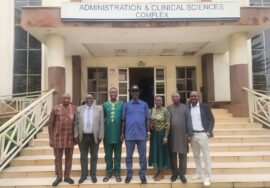
The AIA4OneHealth Research Hub recently held a strategic collaboration meeting with the Global Health Institute (GHI) at the American University of Beirut (AUB). The discussion focused extensively on GHI’s Epidemic and Pandemic Preparedness Program (EPaPP), serving as a platform to discuss ongoing public health activities, share knowledge, and identify mutual areas of interest for future collaboration.
The meeting was designed to explore how cross-regional partnerships can drive the development of indigenous and locally developed solutions for epidemic preparedness and prevention specifically tailored to the Global South.
AIA4OneHealth team was introduced to the structural and strategic framework of the AUB Global Health Institute. Established in 2017, GHI is the first institute of its kind in the Middle East and North Africa (MENA) region, dedicated to addressing global health challenges through an interdisciplinary and contextualised approach. The dialogue heavily featured EPaPP, which operates under GHI’s Research and Policy Division. The program aims to thoroughly understand the landscape of preparedness in the MENA region to inform and develop contextualized solutions for both current and future epidemics and pandemics.
As part of AIA4OneHealth’s contribution to the session, the team highlighted its core mission of building scalable, technology-driven solutions to address complex public health challenges. Representatives detailed how AIA4OneHealth leverages artificial intelligence and the One Health framework to modernise disease tracking, notably through the IDS-Master platform, transitioning communities from reactive reporting to unified, real-time early warning systems. Discussions explored key areas where AIA4OneHealth’s predictive modeling and digital infrastructure can align with GHI’s initiatives.
Key areas of learning and knowledge exchange centered on how EPaPP generates and promotes contextualized evidence to improve equitable and responsive epidemic preparedness. The framework discussed emphasised achieving this by enhancing workforce capacity collaborations, health information systems, and overall governance.
The discussion highlighted the critical importance of partnerships in solving contemporary challenges in the Global South. Because both the MENA region and sub-Saharan Africa face unique infrastructural and socioeconomic hurdles during health crises or outbreak, combining GHI’s evidence-based policy research with AIA4OneHealth’s intelligent, community-sensitive surveillance technology creates a comprehensive approach to global health security.
The expected impact of this ongoing dialogue is a stronger culture of knowledge exchange, improved implementation of digital health systems, better-prepared public health workforces, and ultimately, a more resilient epidemic and pandemic prevention network across the Global South.
AIA4OneHealth remains committed to creating and nurturing global platforms that enable researchers and health officials to learn, connect, innovate, and translate shared knowledge into sustainable public health defenses.