Ai4OneHealth trains DSNOs, epidemiologists on AI tool amid surveillance challenges
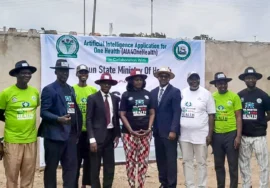
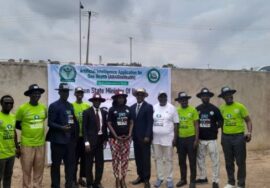
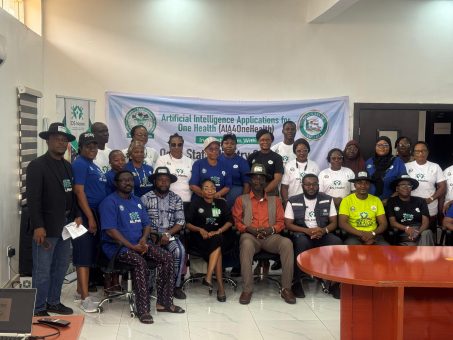
The Ogun State Ministry of Health, in collaboration with Artificial Intelligence Application for One Health (Ai4OneHealth), has trained Disease Surveillance and Notification Officers and epidemiologists on the deployment of an artificial intelligence-driven surveillance tool aimed at strengthening disease monitoring across the state.
The training, held in Abeokuta, brought together public health officials and technical experts to demonstrate the Integrated Disease Surveillance (IDS) Master application, designed to enhance early detection and response to public health threats.
Speaking at the event, the Director of Public Health, Dr Yomi Bamiselu, represented by Dr Saheed Akinbowale, said the initiative was part of ongoing efforts by the state government to improve its disease surveillance system.
He noted that the application would complement existing structures and called on participants to provide feedback that would improve its functionality.
“This application is supposed to strengthen our surveillance system. While we are undergoing this training, we expect participants to note observations, identify possible challenges, and make recommendations because they are the frontline users,” he said.
Akinbowale added that the state had maintained consistent engagement with stakeholders on the project, including previous demonstrations of the application at the level of the Commissioner for Health.
He emphasised that continuous improvement would be key to the success of the tool, likening it to regularly updated digital platforms.
“Every application evolves over time. We want users to point out gaps, overlaps with existing systems, and areas that need improvement so that the tool can be optimised for effective use,” he added.
In his opening remarks, the Project Lead, Adesina Sodiya, said the application was developed as part of a research effort to provide practical solutions to public health challenges rather than theoretical outputs.
He explained that the initiative received funding support from an information technology research council, which enabled the development of the mobile-based application.
“We do not want to conduct research that will end up on the shelf. Our goal is to build practical tools that can support the work being done at the state level,” Sodiya said.
He disclosed that, as part of the project, participants would receive monthly data support and mobile devices to facilitate real-time reporting and usage of the application.
According to him, the devices are expected to be distributed in the coming months.
Also speaking, Dr Olorunjube Falana, who introduced the Ai4OneHealth initiative and the IDS Master platform, said the tool was developed through collaboration among researchers, health institutions, and government agencies.
He explained that Ai4OneHealth is a multidisciplinary research group involving experts from universities, federal medical centres, and state health ministries, working to integrate artificial intelligence into public health systems.
Falana said the IDS Master application was designed to capture, analyse, and disseminate health data in real time, enabling authorities to detect disease outbreaks early and respond promptly.
“Our goal is to ensure that we do not wait until people fall sick before we act. The system allows us to scan the environment, gather data, and generate insights that support proactive decision-making,” he said.
He added that the application features modules for incident reporting, data validation, and automated alerts, as well as a mobile interface that allows health workers to collect and transmit data from communities across the state.
Public health experts have long emphasised the need for improved surveillance systems in Nigeria, particularly following outbreaks of infectious diseases such as Lassa fever and cholera, which have exposed gaps in early detection and response mechanisms.
The adoption of artificial intelligence in disease surveillance is seen as a significant step towards strengthening Nigeria’s health security by improving data-driven decision-making and enhancing coordination among health authorities.
Officials at the training expressed optimism that the deployment of the IDS Master application would improve efficiency, reduce response time to outbreaks, and ultimately contribute to better health outcomes in Ogun State.